Style
Skin-contact wine
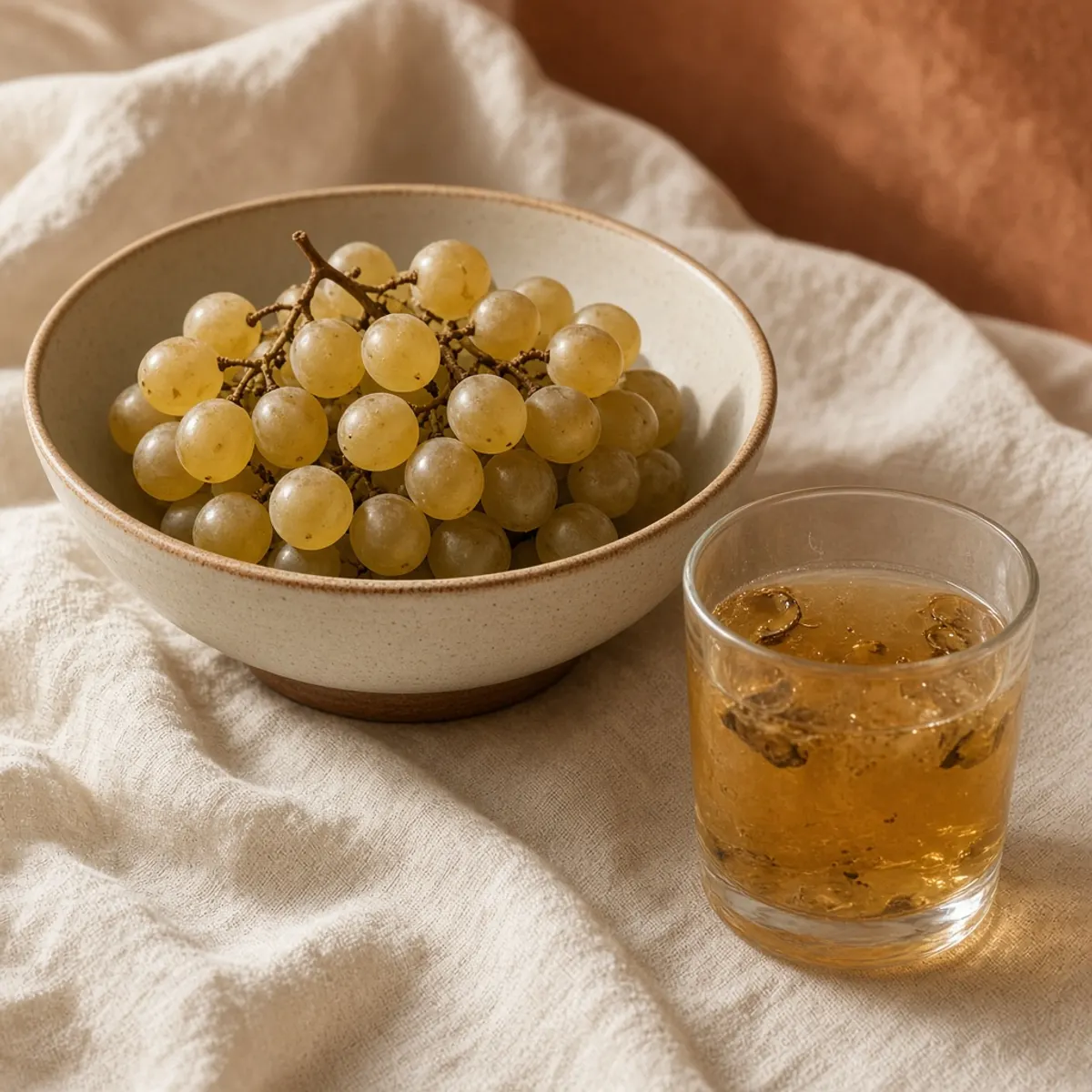
Skin-contact wine is the method behind orange and amber wine: white grapes are crushed, and the skins stay in the juice long enough to stain it and change the feel.
Updated October 2026
Why winemakers do it
Skins hold color, aroma, and tannin. Leave them in and a quiet white grape can taste broader, more herbal, and more savory. Pull them out quickly and you get a familiar pale white. The choice is a dial, not a switch.
The same grape can go either way. Pinot Grigio can be silver and crisp, or copper and lightly tannic. Ribolla Gialla can be a simple white or a deeper skin-contact wine. The label has to tell you which one you are holding.
Time changes everything
A few hours to a couple of days is a short maceration. The wine stays pale gold or light copper, with a hint of grip. One to four weeks is a middle style: apricot, tea, and a clearer tannic line. Several months, sometimes in a buried clay pot, is the deep amber end.
Longer is not better. It is just different. If you usually drink crisp white wine, a short contact is the honest introduction. The amber wine page is the far end of the same idea.
Words that help on a label
Look for skin contact, skin-fermented, macerated, maceration, on skins, amber, orange, ramato, or qvevri. Qvevri means a traditional Georgian clay vessel. It often signals a long soak, but the vessel is not required for skin contact. Steel and wood are common too.
- Skin contact or maceration: the method, whatever the color.
- Ramato: usually copper Pinot Grigio from northeastern Italy.
- Amber or orange: the color, often used when the wine is deeper.
- Qvevri: a clay pot, common for Georgian amber wine.
How skin-contact wine is made
The cellar steps that turn white grapes into skin-contact wine.
- Start with white grapes. The fruit is white-wine fruit: Ribolla Gialla, Rkatsiteli, Pinot Grigio, and many others.
- Crush and keep the skins. Juice and skins stay together. That contact is the whole idea.
- Wait. Hours make a light copper wine. Weeks or months make a deeper amber wine with more tannin.
- Separate and finish. The wine is drained off the skins, then fermented to dryness in most classic examples, and aged before bottling.
Questions people ask
Is all orange wine skin-contact wine?
Yes. The orange color of this style comes from white grape skins in the juice. A wine cannot be orange in this sense without that contact.
Is skin contact the same as leaving a wine open?
No. Skin contact happens before or during fermentation. Oxygen is a separate choice. A skin-contact wine can taste fresh or nutty depending on how much air it saw.