Grapes
Grapes used for orange wine
Any white grape can become orange wine. The varieties below are the ones you are most likely to see written on a label.
Updated October 2026
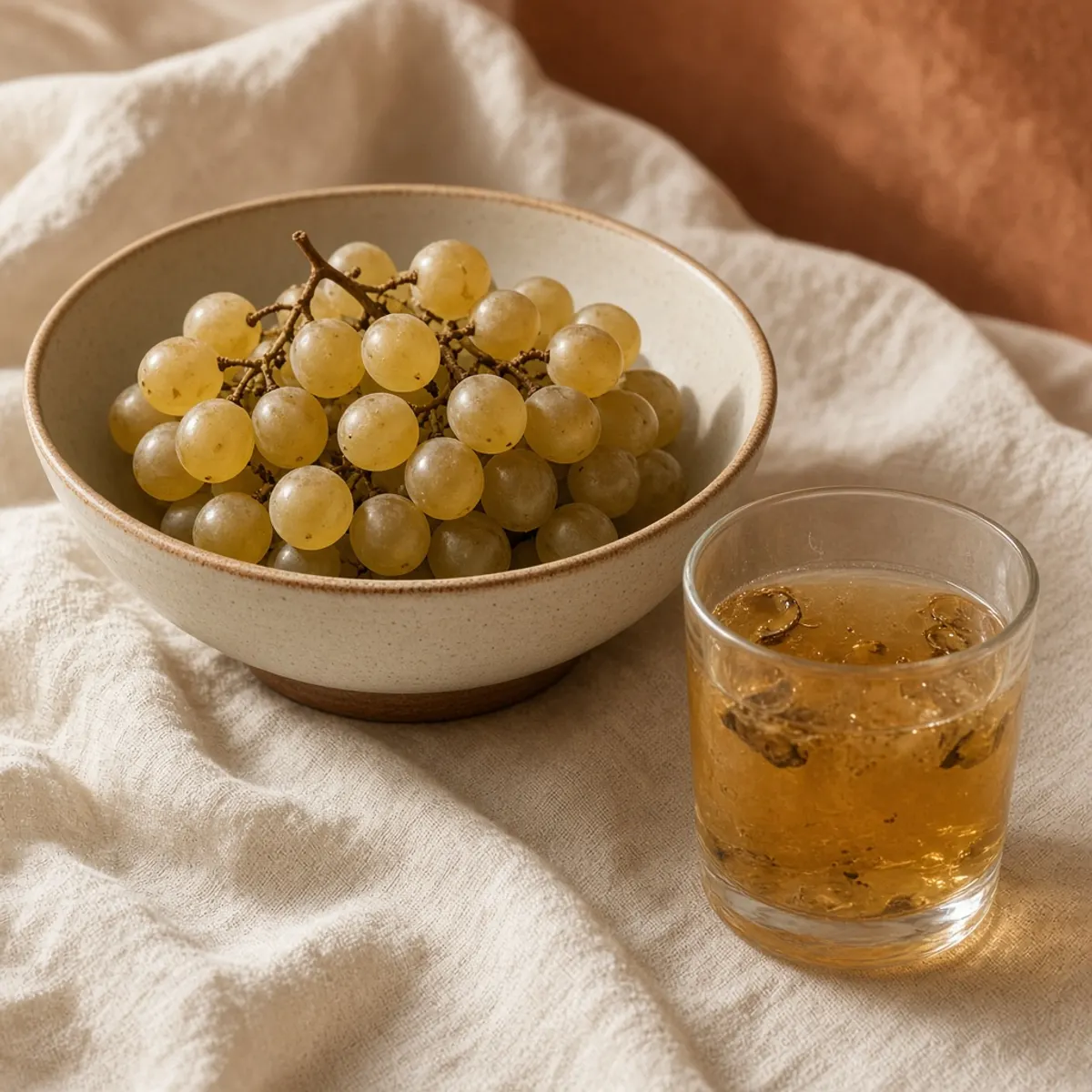
Grapes worth recognizing
The grape still shows through the skins. Skin contact adds tea, peel, and tannin on top of whatever the variety already tasted like. That is why two amber wines can feel unrelated.
- Rkatsiteli: the Georgian amber benchmark. Apple and quince under walnut and tea when it spends a long time on skins.
- Mtsvane: often blended or bottled beside Rkatsiteli. Floral and a bit lighter.
- Ribolla Gialla: also called Rebula in Slovenia. Herbal, pear skin, gentle grip. A Friuli and western Slovenia staple.
- Pinot Grigio: as ramato, it turns copper with a short maceration and stays fresher than a deep amber wine.
- Friulano, Malvasia, and Pinot Bianco: common in northeastern Italy for savory, not sweet, skin-contact wines.
- Gewürztraminer and other aromatic grapes: skin contact can push the perfume into rose, lychee, and spice. Check that the wine is dry if you expect that.
- Chenin Blanc, Vermentino, Sauvignon Blanc, Chardonnay: all show up. Read the region and the skin-contact note, not just the grape.
What the grape cannot tell you
The variety does not tell you the hours on skins, the vessel, or whether the wine is cloudy. A Chardonnay with two days of contact and a Chardonnay with three months in clay are different drinks. Use the grape as a familiar handle, then read how long the skins stayed in.
The starter bottles page turns three of these grapes into something you can ask for in a shop.
Questions people ask
What grape is orange wine made from?
White grapes. Rkatsiteli, Ribolla Gialla, and Pinot Grigio are common. There is no single orange grape.
Is Pinot Grigio an orange wine?
Only the skin-contact version, often called ramato. Most Pinot Grigio is a pale white with no meaningful skin contact.