Style
Amber wine
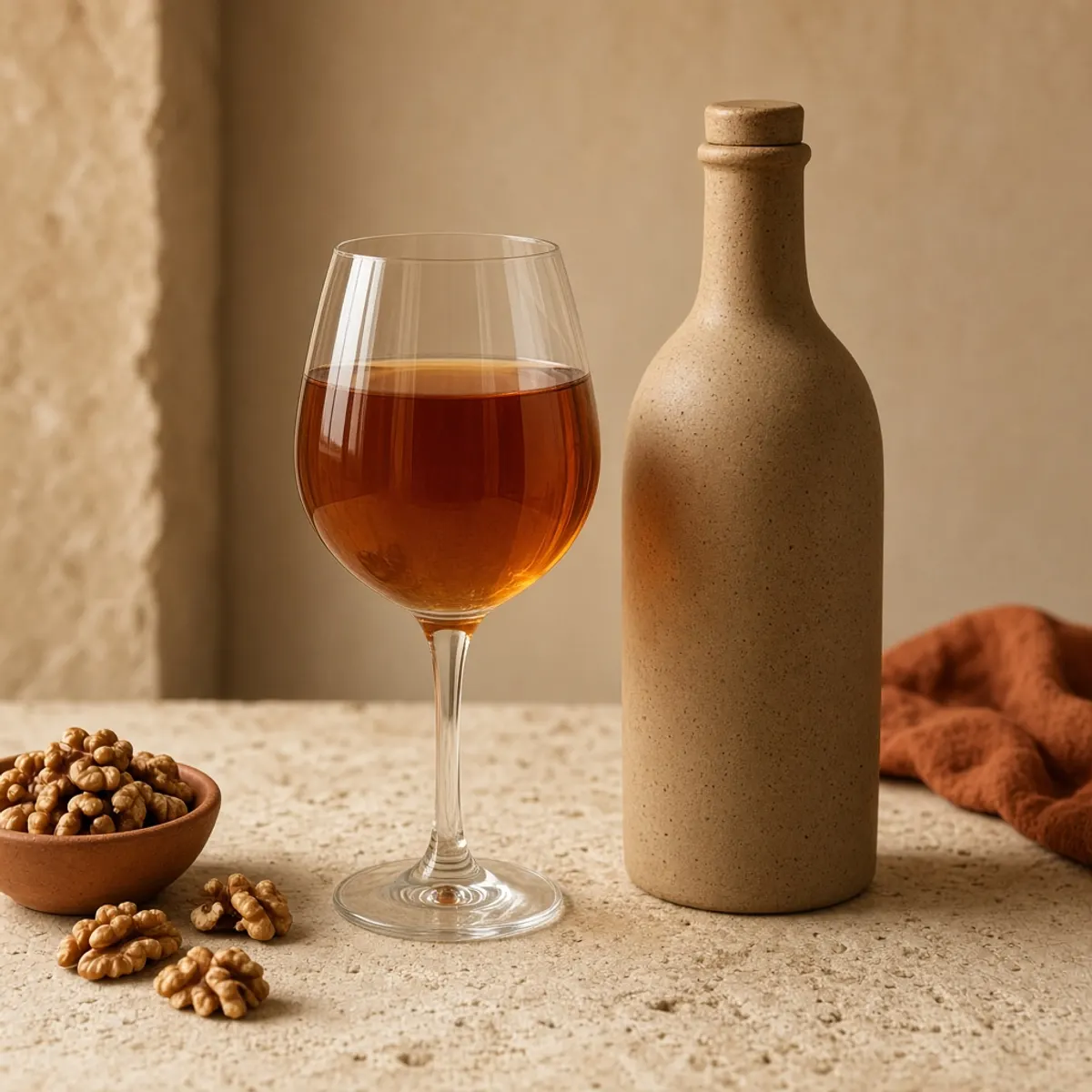
Amber wine names the deep end of skin-contact white wine: tea-colored, dry, and tannic enough to feel closer to a light red than to a pale white.
Updated October 2026
Where the name comes from
Georgia has made wine in qvevri, large buried clay pots, for thousands of years. White grapes such as Rkatsiteli and Mtsvane often stay on their skins in those pots, and the wine comes out amber. That tradition is why amber is sometimes used more specifically than orange.
Outside Georgia, producers use amber for any deeply colored skin-contact white. The word is descriptive. It is not a guarantee of clay, or of a single region. If the label also says qvevri, the vessel is part of the story.
How it tastes
Think dried apricot, orange peel, black tea, walnut skin, and sometimes a savory, almost saline finish. Tannin is real. It can feel drying if you drink it ice-cold or next to a delicate piece of raw fish. It makes more sense with food that has fat, salt, or char.
Most traditional examples are dry. A sweet amber wine exists, but sweetness is a separate decision, explained on is orange wine sweet?.
How it sits next to other orange wines
Use amber when you want the structured style, and orange or skin-contact when you mean the whole family. A pale ramato is orange wine. It is not what most people mean by amber. The starter bottles are the easier first glasses; this page is the deep end.
Questions people ask
Is amber wine the same as orange wine?
Amber wine is orange wine at the deeper, more tannic end. All amber wine in this sense is skin-contact white wine. Not every orange wine is dark enough to call amber.
Does amber wine have to be made in clay?
No. Clay qvevri is the Georgian reference, and it shapes texture. Producers also make deep skin-contact wines in steel and wood.