FAQ
Is orange wine sweet?
Most orange wine is dry. The color comes from skins, not from sugar, even when the wine smells like apricot or orange peel.
Updated October 2026
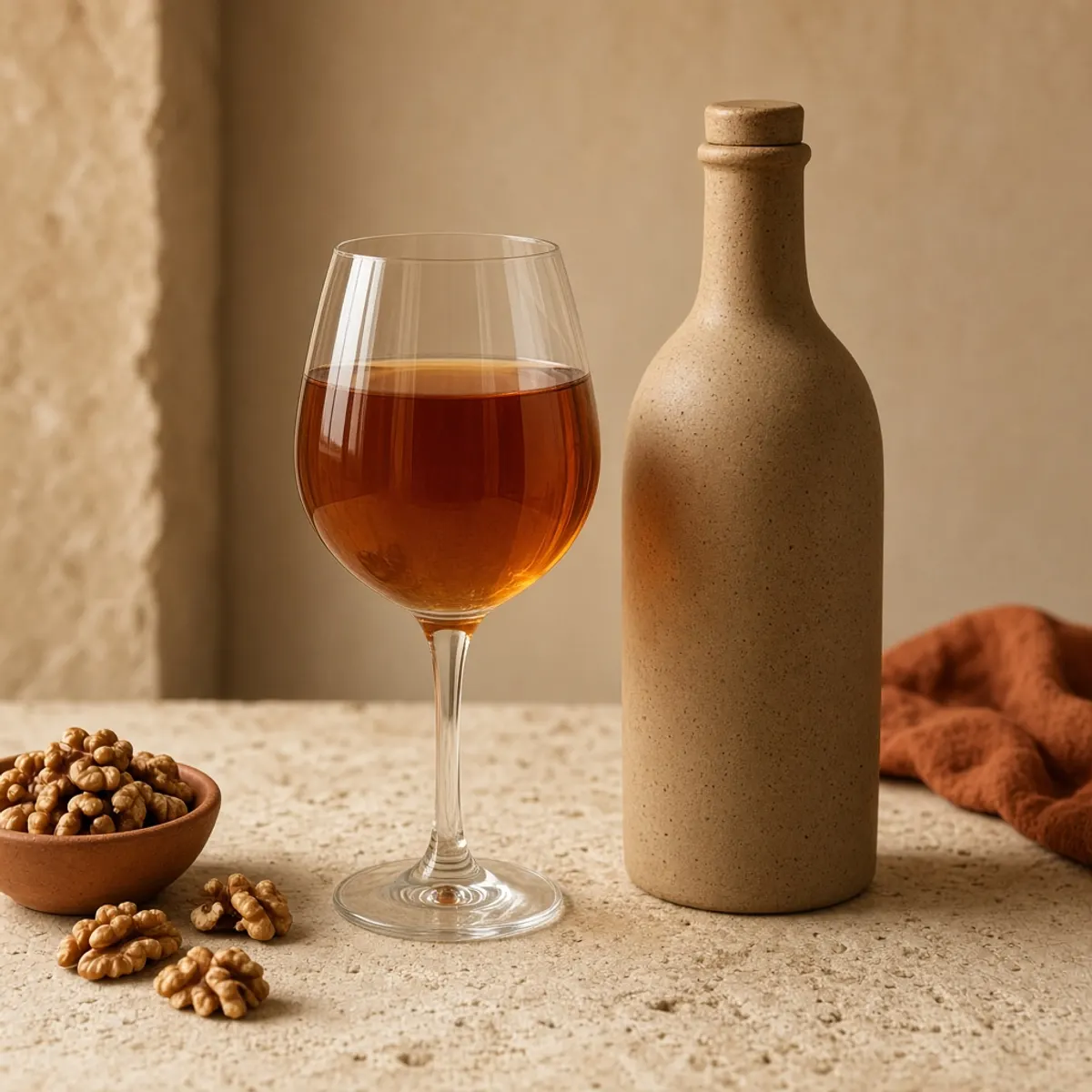
Why it smells sweet and tastes dry
Dried fruit, honey, and citrus peel are aromas. They show up in fully fermented wines that have almost no sugar left. Tannin and bitterness make the finish feel even drier. If you only smell the wine, you will guess wrong.
Sweet orange wines exist. They are the exception, and the label usually says so with words like sweet, dolce, or a clear late-harvest note. Assume dry unless the bottle tells you otherwise.
How to check
Look for “dry,” “sec,” or “asciutto” if you want reassurance. Alcohol around 12–14% with no sweetness claim is the usual dry pattern. A very low alcohol and a dessert-wine bottle shape are reasons to pause and read.
A fruity smell is not a warning. Lunella Orange and Ramin Orange are the least likely to confuse aroma with sugar.
Questions people ask
Is orange wine sweet or dry?
The classic styles are dry. Sweet versions are made on purpose and are usually labeled as sweet.
Does amber color mean the wine is sweet?
No. Amber is skin contact and time. Sugar is a separate winemaking choice.
Why does my orange wine taste bitter?
Bitterness and tannin come from skins, seeds, and sometimes stems. That is structure, not sugar. Food with salt, oil, or nuts usually balances it. See food matches.